
Do you own a Debenu Quick PDF Library 12/11/10/9/8/7? Upgrade to Debenu Quick PDF Library 13!

Foxit Quick PDF Library

Quick PDF Library 7.16 Released

September 14, 2009

Quick PDF Library 7.16 has been released and is now ready for download from the updates page. The new version contains over twenty new functions, important bug fixes and a number of customer-requested feature enhancements, such as the ability to output PDFs as TIFFs and the ability to insert, append and count columns and rows in tables. Plus much more.

New Features and Improvements

  • New! GetObjectCount function
  • New! GetObjectCount function
  • New! GetObjectSource function
  • New! DAOpenFromStream function
  • New! DASaveToStream function
  • New! DAGetObjectCount function
  • New! DAGetObjectSource function
  • New! DAGetFormFieldCount function
  • New! DAGetFormFieldValue function
  • New! AppendTableRows function
  • New! AppendTableColumns function
  • New! InsertTableRows function
  • New! InsertTableColumns function
  • New! GetTableRowCount function
  • New! GetTableColumnCount function
  • New! AppendTableRows function
  • New! AppendTableColumns function
  • New! FontFamily function
  • New! DeleteAnnotation function
  • New! CloneOutlineAction function
  • New! GetActionType function
  • New! GetOutlineActionID function
  • New! GetAnnotActionID function
  • TIFF images optionally loaded using GDI+
  • TIFF output added to renderer
  • File names in link annotations (eg. AddLinkToFile) can now be Unicode (/UF key used in file spec dictionary)
  • NewCustomPrinter bug fix
  • HTML text font size bug fix
  • Delphi 2009 string cast bug fix
  • Fixed bug signing a PDF produced by Word 2007
  • Fixed bug with RenderDocumentToFile page number substitution
  • New pixel offset mode for rendering images to eliminate white lines
  • C# DLL wrapper handles unicode filenames correctly
  • Fixed memory leak bug: rendering documents with many large images
  • Fixed memory leak bug in DLL allocation
  • Bug fix for PDFs with comments in the cross reference stream
  • Improvements to GetPageLGIDictContent
  • Bug fix AddSubsettedFont
  • AddToFileList now supports Unicode file names

Free Upgrade

Version 7.16 is a minor update and therefore all existing version 7.x license owners are entitled to a free upgrade. Owners of older versions of Quick PDF Library can upgrade online here for $149.40.

Discuss The New Version

We’re proud of the community that has formed around Quick PDF Library, so we’d like to encourage new users to join in the fun and discuss the latest version of Quick PDF Library over at QuickPDF.Porg.

P.S. In version 7.17 we’ll be introducing much improved support for EMF/WMF files. Stay tuned!
By Rowan | Comments (1) | Posted in News,Quick PDF Library,Releases

Why Is A PDF SDK Necessary? Why Can’t I Go It Alone?

September 5, 2009

Why is a PDF SDK necessary? Why can’t I write the necessary code myself?

This isn’t a question we often get — generally speaking, if a developer has contacted us, it’s because they already know the answer. But it is a question that I quite frequently see on the developer Q & A site, StackOverflow.com.

Some programmers — and lets be fair, managers — are notorious for having a do-it-yourself attitude. This in itself isn’t a bad quality, in fact, in a lot of cases, it’s a great quality, but there are other times when it’s more of a hindrance than a benefit.

Lets look at adding PDF functionality to an application, as an example. PDF is an ISO standard and the PDF reference, which describes very aspect of the PDF format, is freely available online. Anyone can download the PDF reference, decipher it and then build their own PDF library to handle their PDF needs.

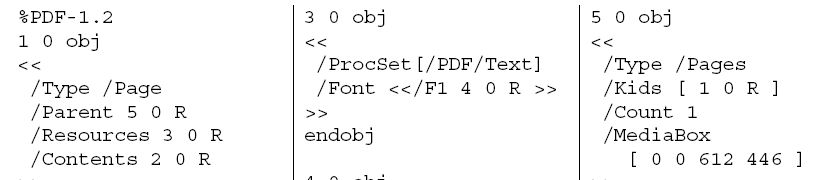
PDF code

But most don’t.

The reason is pretty simple: the PDF specification is a large and complex document and it’s contents aren’t easily deciphered. Reading and understanding the entire PDF specification, or even more than just a small bit, takes more than a casual weekend — indeed it can take years to fully understand the full scope of the format. What’s more, not all PDFs are created in 100% accordance with the PDF specification. Due to the high number of PDF producers available, there is a lot of poorly constructed PDFs floating around — which you’ll have to account for if you’re creating a serious business application. And unfortunately, this is quite a time consuming task.

All of this means that unless your in the business of developing complete PDF solutions, it’s probably not worth your time or money to go it alone and develop an in-house solution, when you could simply purchase a third-party library for a few hundred dollars and save yourself hours, and hours, and hours of work.

By Rowan | Comments Off on Why Is A PDF SDK Necessary? Why Can’t I Go It Alone? | Posted in Quick PDF Library,Tips & Tutorials

Support For Unicode Characters In Filenames And Paths

August 30, 2009

你好

مرحبا

おはよう ございます

привет

HALLÅ

हैलो

What have I written above you might be wondering? Well, I’ve tried* to write hello in a few different languages to highlight the new support for Unicode characters in filenames and paths — which was introduced with the release of version 7.15 of Quick PDF Library. The great news is that all of the above characters can now be properly handled in filenames and paths by all editions of our SDK.

There are many different ways to encode Unicode characters. One way is to use strings with 16-bit characters. COM/ActiveX uses 16-bit characters, so adding Unicode support for the ActiveX edition of the library was easy.

For the Delphi and DLL editions, the strings have always been 8-bit characters and unfortunately we can’t change the definition of functions to use strings with 16-bit characters as this would cause issues with backwards compatibility.

This means that when using the Delphi and DLL editions and working with Unicode characters, you need to encode your file names with UTF8 encoding, as mentioned in the function reference.

Different languages will have different functions to do the UTF8 encoding. For Delphi, the Utf8Encode function can be used, for example:

var
 FileNameW: WideString;
 FileNameA: AnsiString;
begin
 FileNameW := WideString('C:\unicode') + WideChar(20081) +
WideString('\test.pdf');
 FileNameA := Utf8Encode(FileNameW);
 QP.SaveToFile(FileNameA);
end;

That would save the file in the “C:\unicode乱\test.pdf” folder.

So far the response to the addition of this hotly demanded feature has been has been fantastic. If you have any other features that you really want to see added to Quick PDF Library in the not-to-distant future, visit our feedback page where you can suggest new features and vote on features that other customers have suggested.

* I hope I’ve written hello — if I’ve written something else, please let me know!

By Rowan | Comments Off on Support For Unicode Characters In Filenames And Paths | Posted in News,Quick PDF Library,Tips & Tutorials

Quick PDF Library 7.15 Released

August 6, 2009

Quick PDF Library 7.15 has been released and is now ready for download from the updates page.

The new version includes a number of new exciting features and improvements, such as unicode support for filenames, support for GeoPDF dictionaries, improved EMF/WMF importing, font rendering and more.

New Features and Improvements

  • New SetBaseURL function
  • GeoPDF support. New related functions: AddLGIDictToPage, GetPageLGIDictCount, GetPageLGIDictContent and DeletePageLGIDict
  • New ImportEMFFromFile function
  • New SetAnnotStrProperty function
  • Renderer allows fonts to be direct objects as well as indirect objects
  • Improved font matching in renderer
  • Implemented Deflate on image data with predictor and BitsPerComponent = 4

On top of these new exciting features and improvements, there were a number of minor improvements and bug fixes.

Free Upgrade

Version 7.15 is a minor update and therefore all existing version 7.x license owners are entitled to a free upgrade. Owners of older versions of Quick PDF Library can upgrade online here for $149.40.

Discuss The New Version

We’re proud of the community that has formed around Quick PDF Library, so we’d like to encourage new users to join in the fun and discuss the latest version of Quick PDF Library over at QuickPDF.org.

By Rowan | Comments Off on Quick PDF Library 7.15 Released | Posted in News,Quick PDF Library,Releases

Getting To Know The TCP/IP Edition Of Quick PDF Library

July 15, 2009

UPDATE: There is now a 64-bit compatible version of Quick PDF Library available as part of version 8. Read more here. Native 64-bit support is provided for the DLL, ActiveX and Delphi editions.

OK, here’s something you probably weren’t expecting – over the past few months, we’ve been working on a version of Quick PDF Library that does a few things.

Firstly, it provides you with the ability to work with 64-bit applications in a native 64-bit environment, as well as the flexibility of accessing Quick PDF Library via TCP/IP from any computer within network reach.

This new edition of the library is now being distributed with the current version of Quick PDF Library. You’ll find all of the files necessary for the TCP/IP edition in the default installation directory (C:\Program Files\Quick PDF Library\TCP).

In this short tutorial, we’re going to show you how to get up and running with this exciting new edition.

Step 1. Install the Quick PDF Library TCP/IP service

Copy the files QuickPDFTCP0714.exe and QuickPDFTCP0714.ini to the folder containing your application (example: C:\QuickPDFLibrary\TCP\

Open a command line in administrator mode, run the following command to install the service “C:\QuickPDFLibrary\TCP\QuickPDFTCP0714.exe” /install

Step 2. Start the service

Edit the settings file QuickPDFTCP0714.ini modifying the IP address and port as you wish:

IPAddress=127.0.0.1
Port=10005

This allows you access the local host on your machine – you can also use this to communicate with machines across your network.

Run the following command to start the service:
net start QuickPDFTCPService0714

Step 3. A simple C# example

Create a simple C# application and add the QuickPDFTCP0714.cs to your project.

Add a single button to the default form, double click and add the following action:

private void button1_Click(object sender, EventArgs e)
{
QuickPDFTCP0714.Client qp = new QuickPDFTCP0714.Client();
if (qp.Connect(“127.0.0.1”, 10005))
{
if (qp.UnlockKey(“YOUR KEY”) == 1)
{
qp.DrawText(100, 500, “Hello from C# via TCP/IP”);
qp.SaveToFile(“C:\\temp\\test.pdf”);
}
else
{
MessageBox.Show(“Could not unlock”);
}
}
}

Start the application, click the button, and then open an Explorer window and check the “c:\temp” folder. You should find a simple file, “test.pdf” with the “Hello from C# via TCP/IP” text in the middle.

How else can you use this?

  • Provide your .NET managed code a way of accessing Quick PDF Library.
  • Write 64-bit code targeting a 64-bit processor.
  • Connect to Quick PDF Library servers across networks.

I’m sure you’ll find lots of interesting uses for this interface, please leave a comment to let me know and we’ll publish some of these stories on the site.

Note: The TCP/IP socket interface provides the “glue” for the 32-bit Quick PDF Library to talk directly with 32-bit and 64-bit builds, managed processes and also remote installations.

Quick PDF Library 7.14 Released

June 16, 2009

Quick PDF Library 7.14 has been released and is ready for download from the updates page.

The new version includes powerful support for creating tables in your PDFs, as well as numerous new improvements and bug fixes.

New Features and Improvements:

  • Delphi 2009 improvements
  • Fixed CFF font decoding bug
  • Bug fix for fonts with /Differences array and no /ToUnicode entry
  • Bug fix for non-embedded fonts with slightly different standard font names
  • Bug fix for matching fonts characters with capital letters
  • New GetCanvasDC and LoadFromCanvasDC functions
  • New GetXFAFormFieldNames function
  • New GetXFAFormFieldName function
  • New GetXFAFormFieldCount function
  • Updated the docs for the XFA functions
  • New GetFontObjectNumber function
  • New SetAdvancePassword function
  • New CreateTable function
  • New SetTableColumnWidth function
  • New SetTableRowHeight function
  • New SetTableCellBorderColor function
  • New SetTableCellBorderColorCMYK function
  • New SetTableCellBorderWidth function
  • New SetTableCellBackgroundColor function
  • New SetTableCellBackgroundColorCMYK function
  • New SetTableCellPadding function
  • New SetTableCellAlignment function
  • New SetTableCellContent function
  • New SetTableCellTextColor function
  • New SetTableCellTextColorCMYK function
  • New SetTableCellTextSize function
  • New SetTableBorderColor function
  • New SetTableBorderColorCMYK function
  • New SetTableBorderWidth function
  • New MergeTableCells function
  • New DrawTableRows function
  • New GetTableLastDrawnRow function
  • New GetTableCellStrProperty function
  • New GetTableCellIntProperty function
  • New GetTableCellDblProperty function

Discuss The New Version

We’re proud of the community that has formed around Quick PDF Library, so we’d like to encourage new users to join in the fun and discuss the latest version of Quick PDF Library over at QuickPDF.org.

By Rowan | Comments Off on Quick PDF Library 7.14 Released | Posted in News,Quick PDF Library,Releases

Quick PDF Library 7.14 Beta 2 Released

May 28, 2009

Quick PDF Library 7.14 beta 2 has been released and is ready for testing. This new beta includes a number of new features and bug fixes.

The biggest new feature in this release is the ability to create tables in your PDFs — this will make generating PDF reports from databases using Quick PDF Library a lot easier. We’ve also included enhanced support for XFA PDF forms and will continue to make improvements in this area in the future.

Click on the button below to download the 7.14 beta 2 build:

List of changes

9 May 2009

  • Added GetXFAFormFieldNames function
  • Added GetXFAFormFieldName function
  • Added GetXFAFormFieldCount function

10 May 2009

  • Updated the docs for the XFA functions

13 May 2009

  • Added GetFontObjectNumber function

15 May 2009

  • Bug fix for fonts with /Differences array and no /ToUnicode entry
  • Bug fix for non-embedded fonts with slightly different standard font names
  • Bug fix for matching fonts characters with capital letters

21 May 2009

  • New SetAdvancePassword function

22 May 2009

  • Bug fix for saving PDFs that had an XRefStm – key now removed from trailer

23 May 2009

  • Added CreateTable function
  • Added SetTableColumnWidth function
  • Added SetTableRowHeight function
  • Added SetTableCellBorderColor function
  • Added SetTableCellBorderColorCMYK function
  • Added SetTableCellBorderWidth function
  • Added SetTableCellBackgroundColor function
  • Added SetTableCellBackgroundColorCMYK function
  • Added SetTableCellPadding function
  • Added SetTableCellAlignment function
  • Added SetTableCellContent function
  • Added SetTableCellTextColor function
  • Added SetTableCellTextColorCMYK function
  • Added SetTableCellTextSize function
  • Added SetTableBorderColor function
  • Added SetTableBorderColorCMYK function
  • Added SetTableBorderWidth function
  • Added MergeTableCells function
  • Added DrawTableRows function
  • Added GetTableLastDrawnRow function
  • Added GetTableCellStrProperty function
  • Added GetTableCellIntProperty function
  • Added GetTableCellDblProperty function

Feedback!

Any feedback large or small is appreciated. We’ll shortly be planning the next round of exciting new features for Quick PDF Library, so we’d really like to know what you want to see added to the SDK. Don’t be shy, email us at support@quickpdflibrary.com and we’ll get back to you asap.

By Rowan | Comments (1) | Posted in News,Quick PDF Library,Releases

Upcoming Price Revision

May 26, 2009

Important – after May 31st, there’ll be a few changes with the Quick PDF Library licensing. We believe that the new structure will provide a fair match of price to value, and allow us to provide the best service possible to our customers.

The price of Quick PDF Library single-developer license will be increasing to $249 USD, however, we will also be introducing a not-for-profit and educational price at a discounted $149 USD.

At the same time, we will be creating a multi-developer license which will replace the 1-5, and 5-10 licenses. This new license will allow you to have as many people in your team (from a few to 10) work with Quick PDF Library at no extra cost.

The Delphi Source Code price will be dropping to $1299 USD – this gives those who want to get their hands dirty more of a chance to do so.

… And as per usual, all of our products are available at a 40% discount for previous owners.

Standard Support

All of our products come with free “best efforts” support as follows:

  • 3 month upgrade insurance
  • 48 hour email support M-F/fair use
  • Minor upgrades free

Premium Support (+25%)

For an extra 25% on your purchase price, you can receive premium support which means you get:

  • 12-24 hour email support M-F, fair use
  • 12 month upgrade insurance (minor+major)
  • Priority bug fixes

So let’s get it out of the way

We believe in considering the total cost of purchase … including support. At the revised pricing, we can ensure that we have the resources in place to make sure when you ask a question, we’re able to answer it in a timely fashion.

If you have any questions about upgrading please email our sales team at sales@quickpdflibrary.com.

By Rowan | Comments Off on Upcoming Price Revision | Posted in News,Quick PDF Library

PDF Web Apps, With Quick PDF Library and PHP

May 6, 2009

Customers often ask: does Quick PDF Library work with PHP? The answer is yes, and what’s more, it works very well with minimal setup required.

What does this mean? It means that you can use Quick PDF with PHP to build PDF web apps that do things like split and merging PDFs, modify security, etc, but also, it means you can add PDF functionality to your existing online apps. Do you want to generate PDF reports from a database on the fly and serve them up to customers through your website? No problem, Quick PDF Library can do that and much more. 

In this example I will show you how to use Quick PDF and PHP with a few simple steps. To demo the library I will be using the ActiveX version of Quick PDF Library and the version of PHP5 and Apache that is bundled with XAMPP. Of course, Quick PDF will also work with PHP and IIS, but I’ll leave that example for another day.

Steps to follow

  1. Install XAMPP for Windows (alternatively you could install PHP and Apache separately if you wished).
  2. Create a folder for your PHP project in c:\xampp\htdocs.
  3. Download and install Quick PDF Library to a directory on your machine.
  4. Locate the ActiveX edition (QuickPDFAX0713.dll) of Quick PDF Library and register it (regsvr32 <path>\QuickPDFAX0713.dll).
  5. Create a PHP file and add it to your project in the htdocs folder (e.g. c:\xampp\htdocs\qpl\index.php).
  6. Open the PHP file and add the following code and then save it.
  7. <?php
    $fileName = “DrawText.pdf”;
    $qp = new COM(“QuickPDFAX0713.PDFLibrary”);
    $validKey = $qp->UnlockKey(“…”);
    if ($validKey == 1)
    {
        echo “License validation successful!”;
        echo “<br />”;
        echo “Valid license key: “;
        echo $qp->LicenseInfo;
        echo “<br />”;
    }
    else
    {
        echo “License validation failed!”;
        echo “<br /><br />”;
    }
    $qp->DrawText(100, 500, “Hello World!”);
    $result = $qp->SaveToFile($fileName);
    if ($result == 1)
    {
        echo “File was successfully saved to disk.”;
        echo “<br /><br />”;
    }
    else
    {
        echo “File could not be saved to disk.”;
        echo “<br /><br />”;
    }
    $qp = null;
    ?>

  8. Execute the PHP file by loading it in your browser (e.g. http://localhost/qpl/index.php) and you’re done!

Some tips

// $qp = new COM(“QuickPDFAX0713.PDFLibrary”);

Call the Quick PDF Library COM object that you have previously registered. It shouldn’t matter where the QuickPDFAX0713.dll file is physically located, however, keeping it in the project folder will ensure that you don’t accidentally delete it. 

// $result = $qp->SaveToFile($fileName);

By default, when saving files to disk using the Apache service that accompanies XAMPP, the files that are created in this example will automatically be placed in the following directory: c:\xampp. Of course, it’s relatively easy to save the file in a different location with a small few adjustments to the PHP code, but I’ll leave that work for you.

The rest of this code should be quite easy to understand. But if you have any questions, leave a comment.

The example that I’ve used in this sample is quite simple, however, there’s no reason why it couldn’t be far more sophisticated. After all, with over 500 functions in the Quick PDF Library, you could build some pretty powerful PDF web apps.

Quick PDF Library 7.13 Released

May 4, 2009

Quick PDF Library 7.13 is now available for download and purchase.

The new version primarily includes bug fixes and performance improvements that were reported on the QuickPDF.org forum over the past few years — as well as a number of new functions and official support for Delphi 2009.

What’s New

  • Delphi 2009 support
  • New functionality for GetAnnotStrProperty and GetAnnotIntProperty to handle GoToR and Launch annotations and speed improvements
  • New EmbeddedFileCount function
  • New GetEmbeddedFileStrProperty function
  • New GetEmbeddedFileIntProperty function
  • New GetEmbeddedFileContentToFile function
  • New GetEmbeddedFileContentToString function
  • New GetEmbeddedFileContentToStream function
  • Improvements to internal outline navigation
  • New GetNamedDestination function
  • Internal support for name objects directly following the obj keyword
  • Bug fix and improvements to encryption fingerprint functions
  • Option to load images using GDI+ instead of internal image handling functions
  • Support for type 3 functions
  • Improvements to image decoding
  • Support for inverted JPEG palettes
  • Faster page location when page tree is a single array
  • Support for loading 8-bit alpha mask from PNG images
  • Better rendering of encrypted documents
  • Support for alternate ICC based color space in renderer
  • Support for W=4 in cross reference stream
  • Speed improvements to object decoding
  • Bug fix for text extraction with option 4 to return single words

Coming soon: 64-bit support

Behind the scenes we’ve been working on a solution for using Quick PDF Library in a 64-bit environment. We’re excited to say — and we know you will be too, since we’ve been receiving an increasing number of requests for such a solution. If you’re interested in doing some testing with this new version, email us at support@quickpdflibrary.com and we’ll happily send it to you.

UPDATE: There is now a 64-bit compatible version of Quick PDF Library available as part of version 8. Read more here. Native 64-bit support is provided for the DLL, ActiveX and Delphi editions.

Upgrades

The upgrade to 7.13 is free for owners of a 7.x license. Owners of older licenses can purchase an upgrade to the new version for US$89.40.

Quick PDF Library Newsletter

If you want to keep up-to-date with all things related to Quick PDF Library, we suggest that you subscribe to our weekly Quick PDF Library Newsletter. In each weeks newsletter we try to keep our users informed about the libraries progress, as well as provide various PDF tips and tricks that can help everyone get the most out of the library.

Feedback!

As always, we’d like to hear from you. Feedback, good and bad, is always appreciated. So let us know what you think about Quick PDF Library.

By Rowan | Comments (2) | Posted in News,Quick PDF Library,Releases

« Older PostsNewer Posts »


© 2015 Debenu & Foxit. All rights reserved. AboutBuyContactBlogNewsletterSupportFAQProduct UpdatesForum
